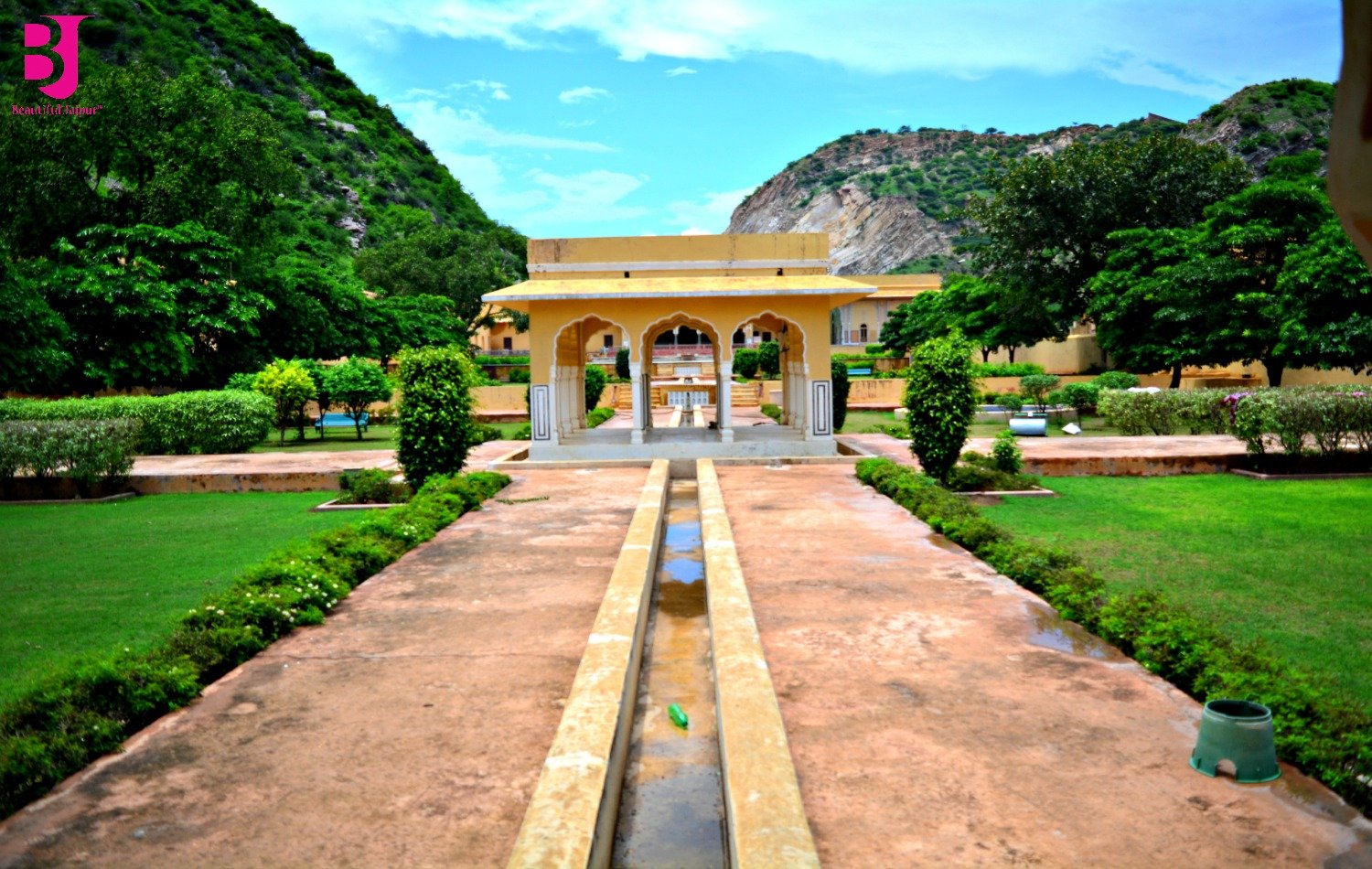
Hidden between the hills of Ghat Ki Guni, Vidyadhar Garden is one of those Jaipur places that many people pass on the road but rarely stop to explore. The garden combines formal lawns, water channels, courtyards and ochre-yellow pavilions with a naturally dramatic Aravalli backdrop. It feels quieter than Jaipur’s better-known monuments and works especially well for travellers interested in architecture, photography and heritage landscapes.
Also called Vidyadhar Ka Bagh or Bagh of Vidyadhar, it lies close to Sisodia Rani Garden on the Jaipur–Agra Road. Here is a practical guide to its history, timings, entry information, photography spots and nearby attractions.
Vidyadhar Garden Jaipur: Quick Information
| Location | Ghat Ki Guni, Jaipur–Agra Road, Jaipur |
|---|---|
| Also known as | Vidyadhar Ka Bagh / Bagh of Vidyadhar |
| General timings | Usually listed as 8:00 AM–5:00 PM, with an evening window on some days |
| Entry fee | Day entry is commonly listed as free; confirm current rules locally |
| Time required | 45 minutes to 1.5 hours |
| Best time to visit | October to March; morning or late afternoon |
| Known for | Charbagh layout, terraced lawns, courtyards, pavilions and hill views |
Vidyadhar Garden Timings and Entry Fee
Vidyadhar Garden is generally listed as open from 8:00 AM to 5:00 PM, with some visitor listings also mentioning a separate evening window between 6:00 PM and 8:00 PM. Day entry is commonly described as free. However, access can vary because of maintenance, official use or private arrangements, so check the current status locally before travelling.
Casual mobile photography is usually the simplest option. Professional shoots, tripods, lighting equipment and pre-wedding photography may need prior permission or separate charges. Do not arrive with a full crew without confirming the rules in advance.
History of Vidyadhar Ka Bagh
The information plaque inside the garden identifies it as an 18th-century garden built by Vidyadhar Chakravarty, the Desh-Diwan of Jaipur, who was known for architecture and design. It credits him with an important role in the construction of Jaipur city.
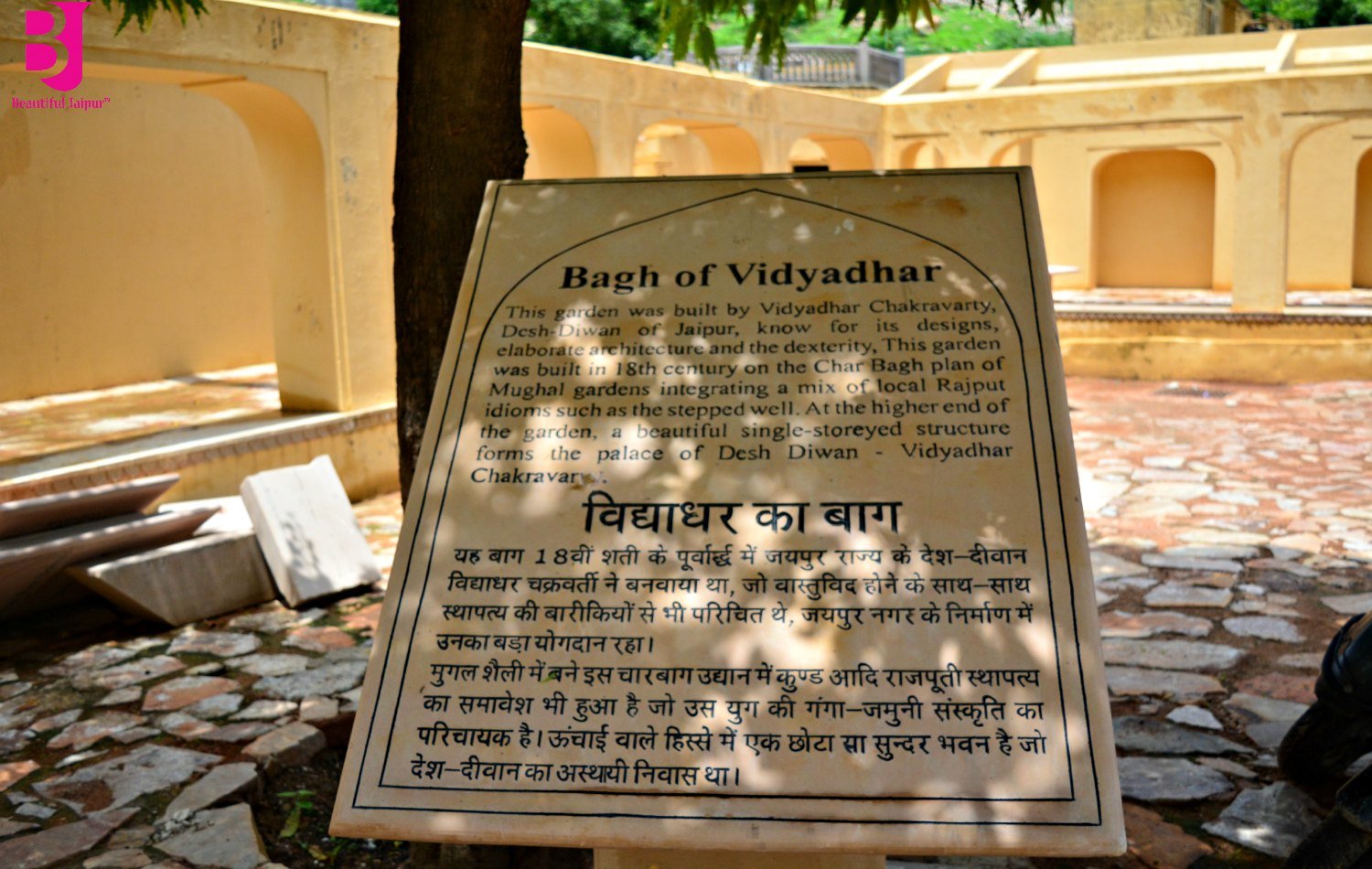
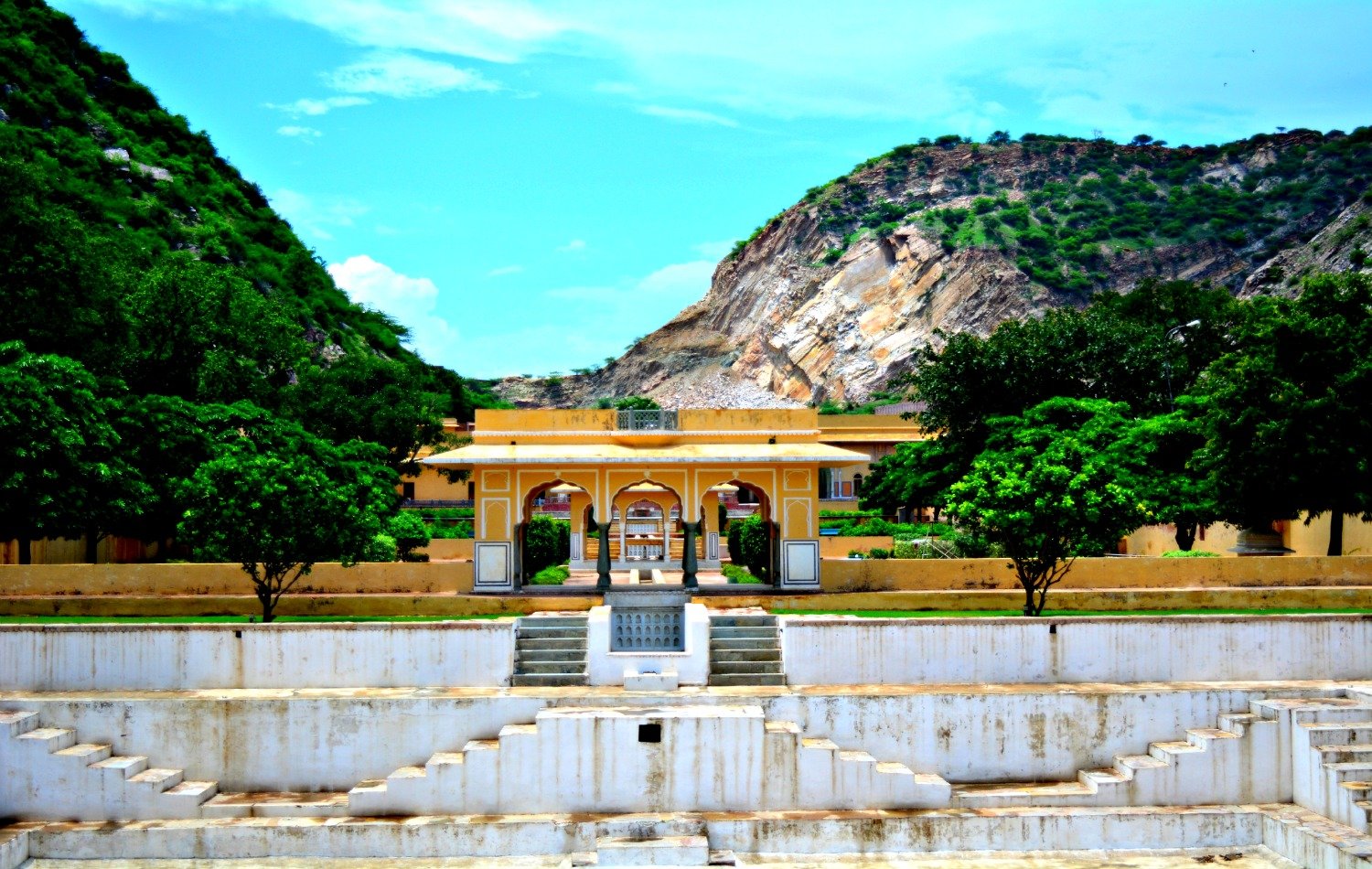
The same plaque explains that the garden follows the Charbagh plan associated with Mughal gardens while bringing in local Rajput elements, including the form of a stepped well. A single-storey structure on the higher side served as the temporary residence of the Desh-Diwan. This combination of ordered garden planning and regional architecture gives the place its distinct identity.
Architecture and Garden Layout
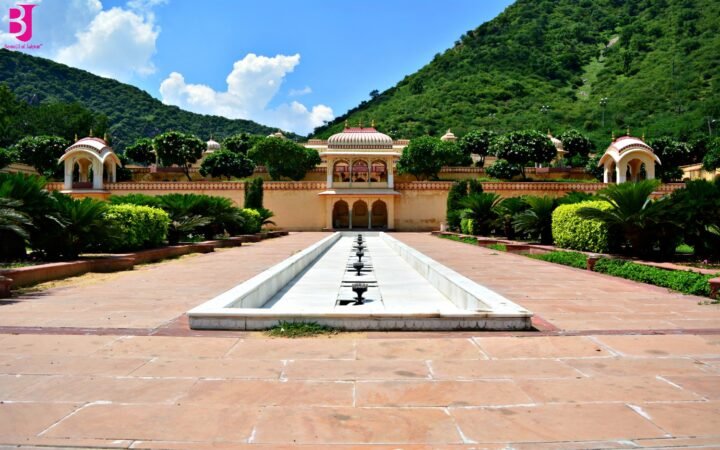
The design is based on symmetry. Paths, channels and pavilions line up along clear axes, but the steep hills surrounding the site soften the formality. Unlike a palace that asks you to focus on one grand façade, Vidyadhar Garden is best understood by walking through its changing courtyards and levels.
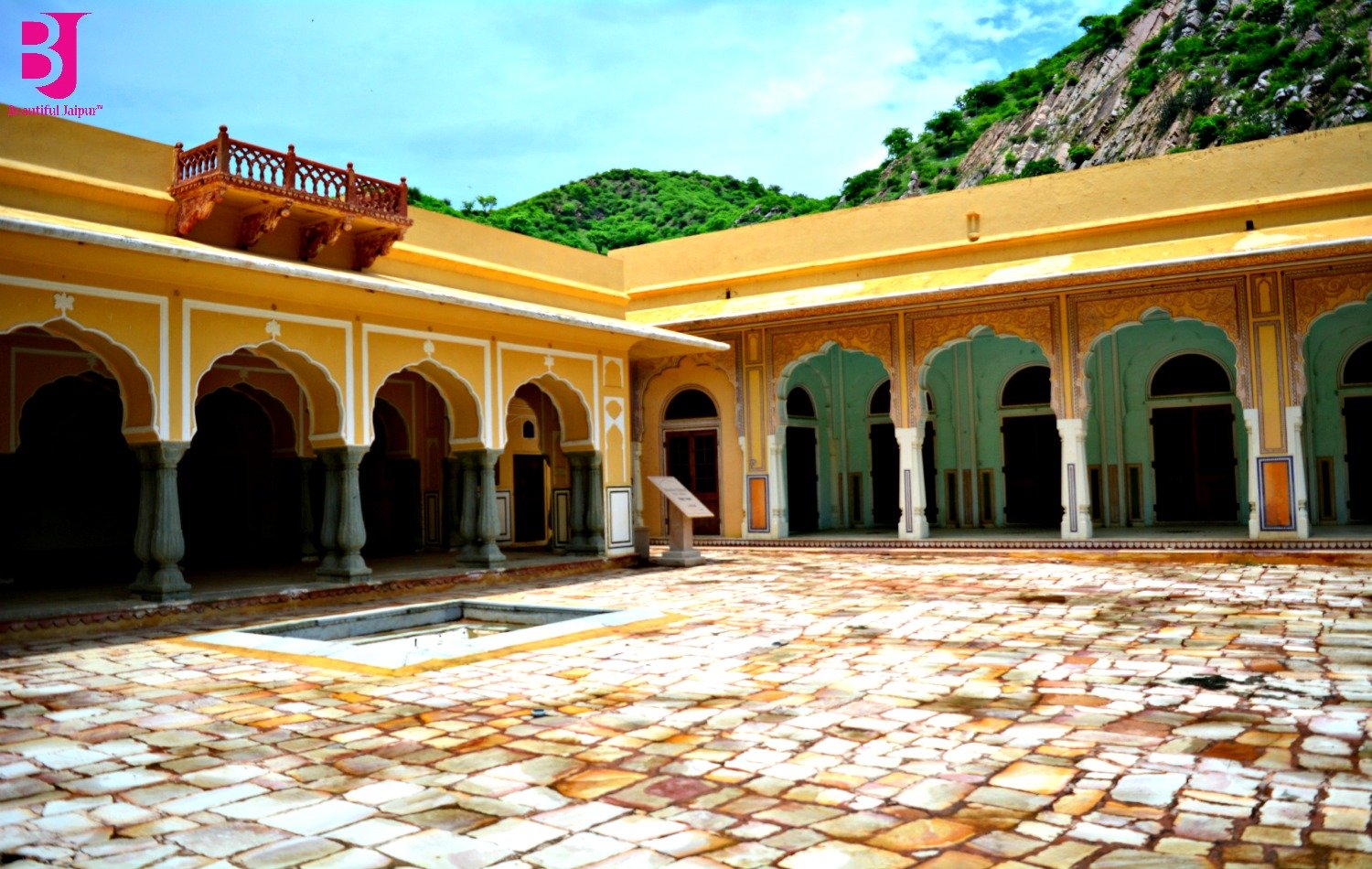
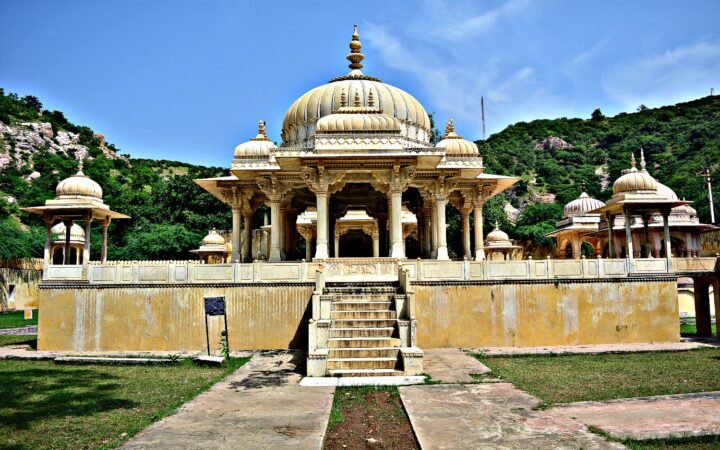
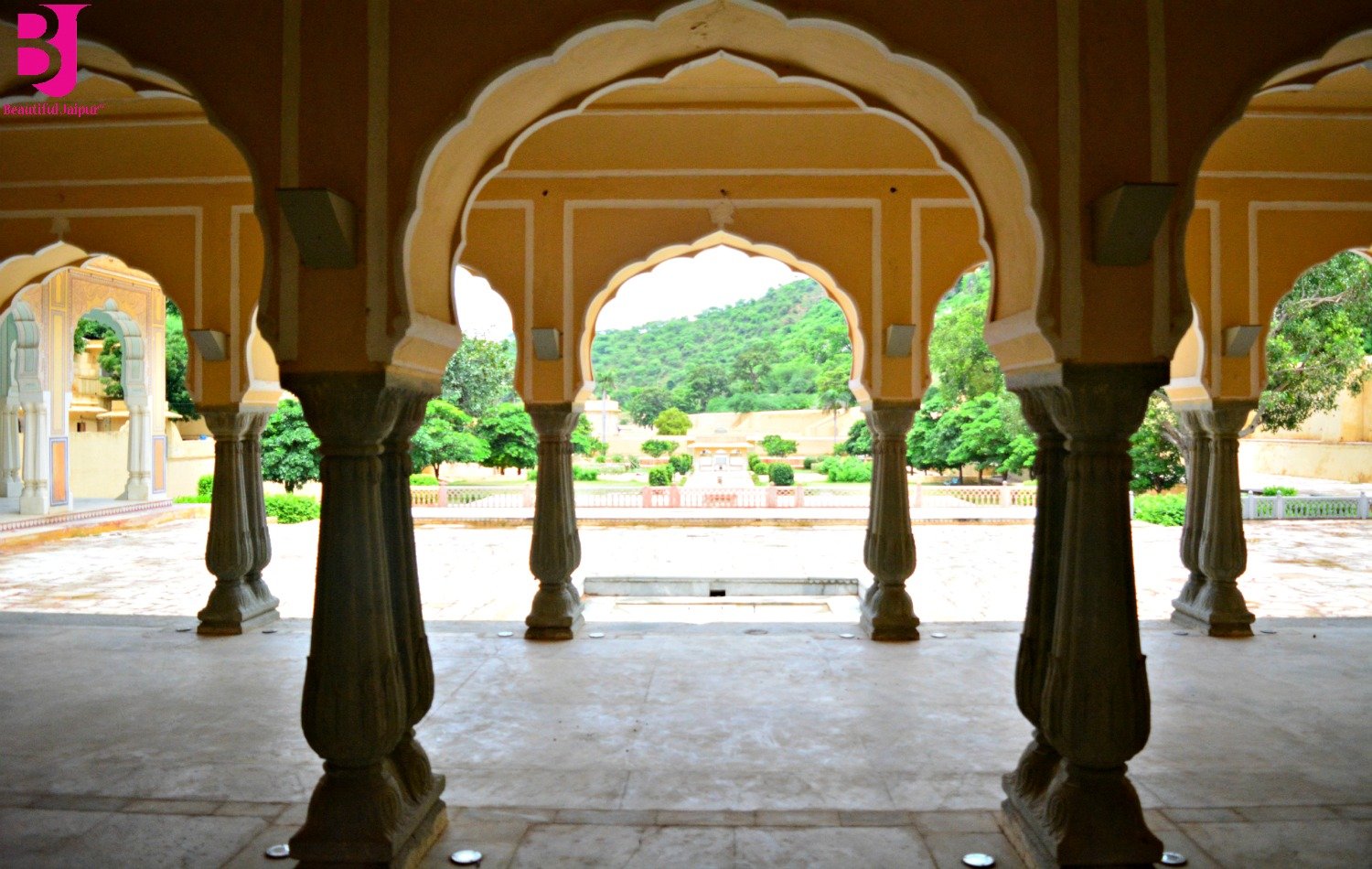
Arched pavilions and framed views
The scalloped arches act almost like picture frames. From the shaded corridors, they reveal lawns, water features and the hills beyond. These transition spaces are also useful during warmer months, when the open garden can feel bright.
Terraced lawns and water channels
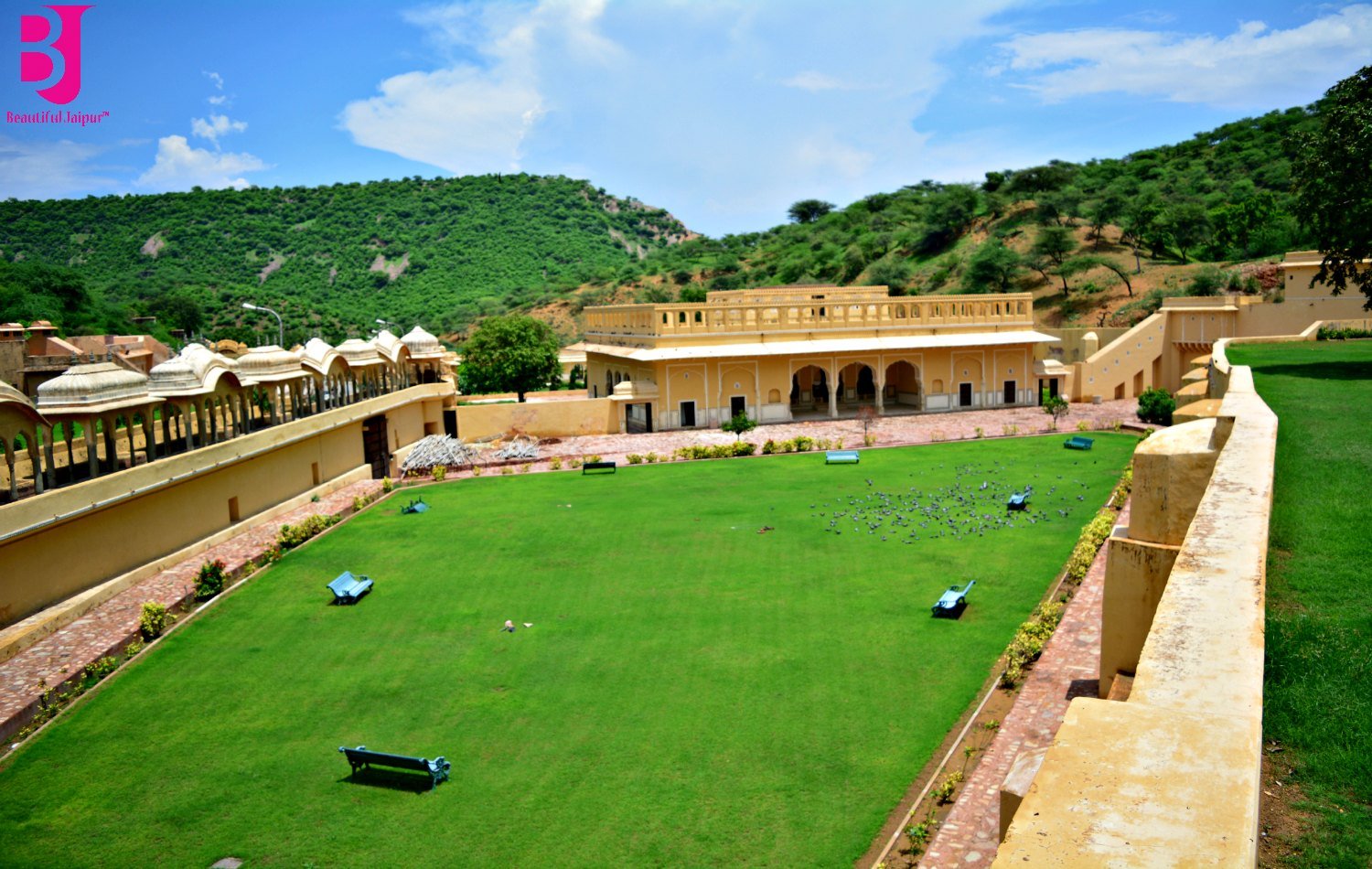
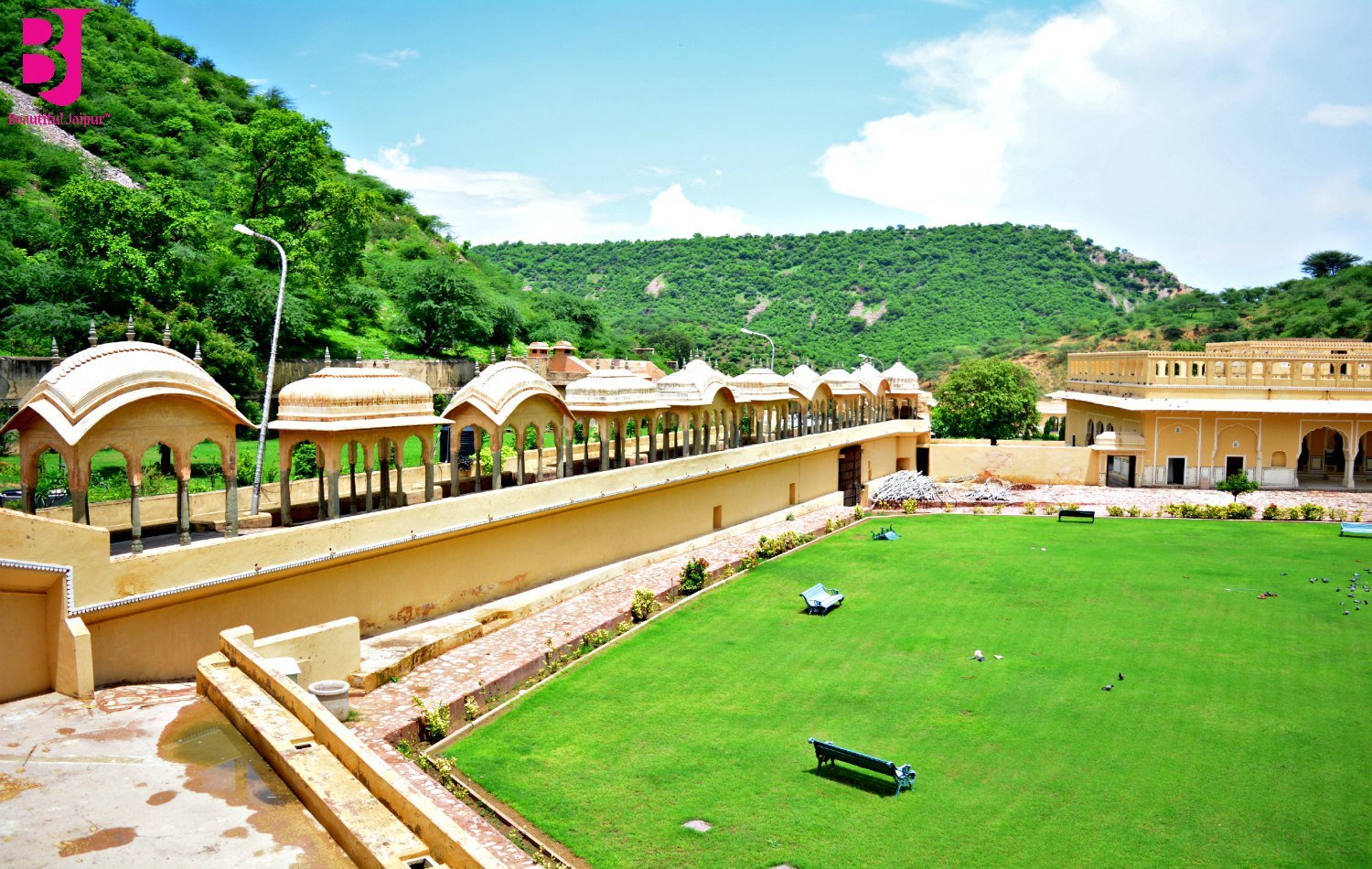
Long lawns, stepped sections and central channels draw the eye towards the palace structures. Water flow and the condition of fountains can depend on the season and maintenance, but the overall symmetry remains impressive.
A garden shaped by the hills
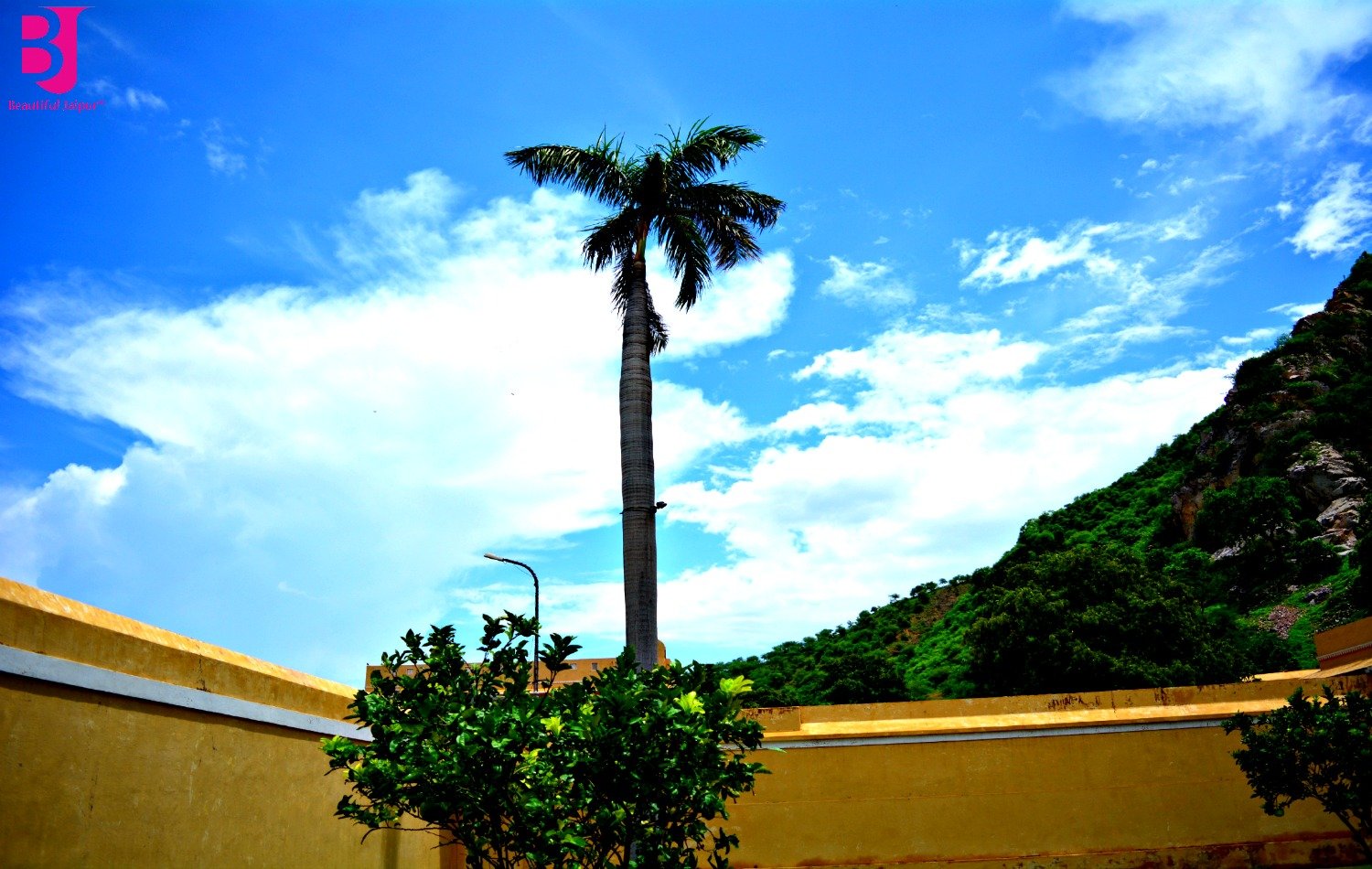
The Aravalli setting is not just a background—it is part of the experience. During and after the monsoon, the slopes turn green and give the ochre architecture a much richer contrast. In summer, the same enclosed valley can feel hot, so timing matters.
Best Time to Visit Vidyadhar Garden
October to March is the most comfortable period for a visit. For photographs, choose the morning or late afternoon, when the light is softer and the arches create stronger shadows. The monsoon is visually rewarding because the hills become greener, but check the weather and walking conditions. Avoid the middle of a summer afternoon.
How to Reach Vidyadhar Garden
The garden is located at Ghat Ki Guni on Jaipur–Agra Road, around 7 km east of the old city area. A cab, auto-rickshaw or private vehicle is the most convenient way to reach it. From Hawa Mahal, the drive generally takes 15–25 minutes depending on traffic. Parking arrangements may vary, so follow the signs and instructions at the entrance.
Places to Visit Nearby
- Sisodia Rani Garden – the easiest place to combine with this visit.
- Galta Ji – a historic temple complex set between the hills.
- Ghat Ki Guni – a heritage corridor known for its gateways and old structures.
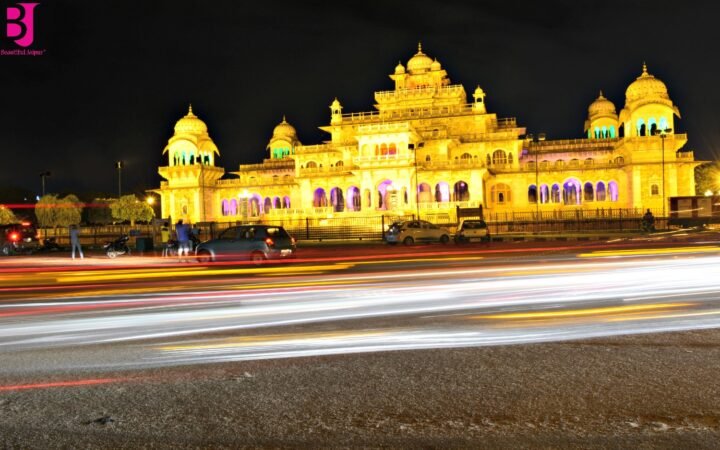
- Albert Hall Museum – a convenient stop while returning towards central Jaipur.
- Hawa Mahal – ideal for extending the day into a Pink City walk.
Practical Tips
- Confirm that the garden is open before making a dedicated trip.
- Carry drinking water; food facilities may not always be available.
- Wear comfortable shoes because the complex has multiple levels and open paths.
- Do not climb on old structures or touch decorative surfaces.
- Ask permission before professional photography, drone use or bringing large equipment.
- Keep the garden clean and avoid leaving food for monkeys or other animals.
Frequently Asked Questions
Is Vidyadhar Garden open to visitors?
It is generally open to visitors, but access can occasionally change due to maintenance or other arrangements. Confirm locally before your visit.
Is there an entry fee for Vidyadhar Garden?
Day entry is commonly listed as free. Charges or permission rules may apply to professional photography and special shoots.
How much time is needed?
Keep 45 minutes to 1.5 hours for a relaxed walk and photographs.
Can Vidyadhar Garden and Sisodia Rani Garden be visited together?
Yes. They are close to each other on the same side of Jaipur and make a practical combined heritage-garden itinerary.
Visitor information checked in September 2026. Timings, access and photography rules may change.