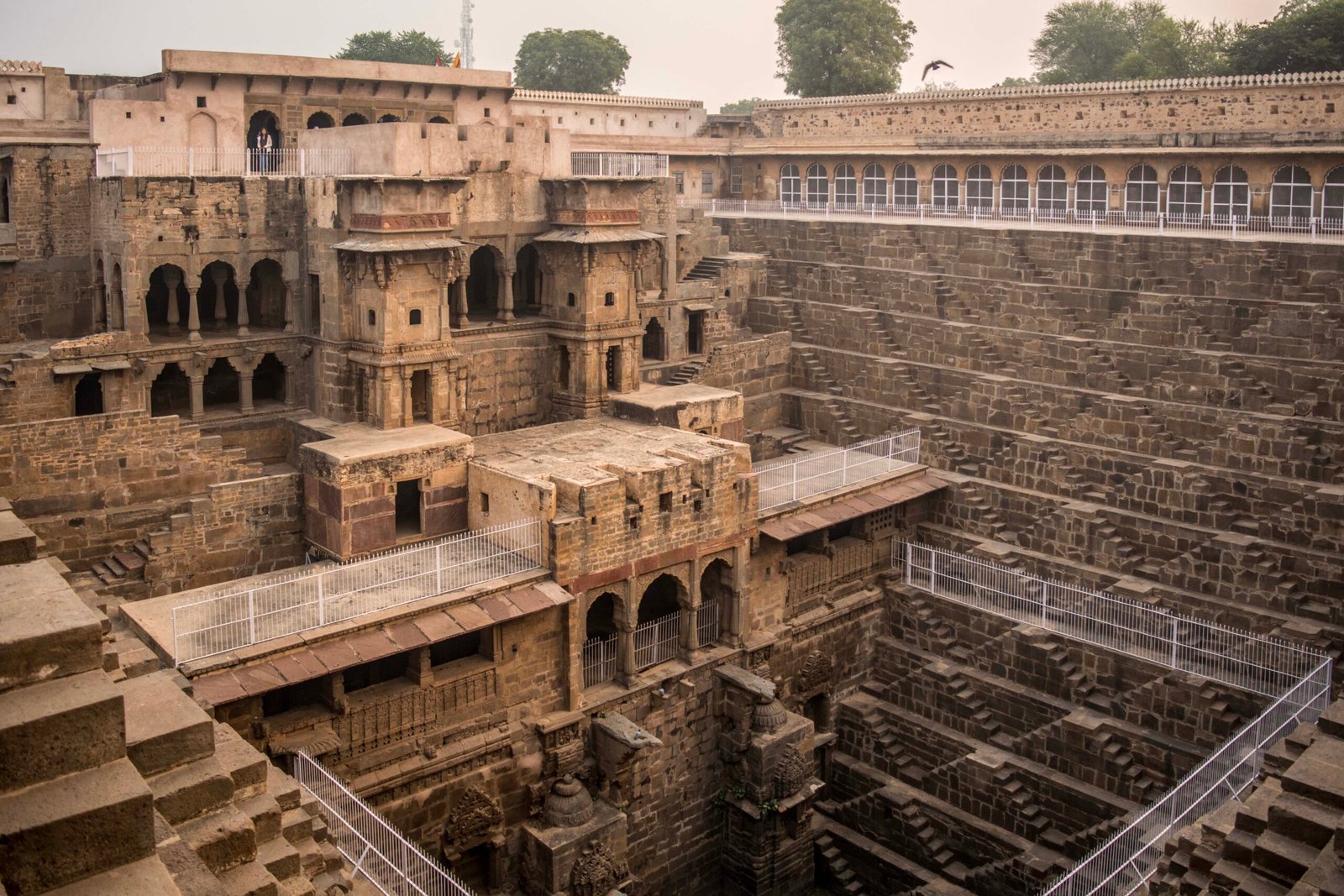
Watch: Chand Baori Abhaneri Travel Vlog
See Chand Baori, its remarkable stepwell architecture and our Abhaneri visit in this travel vlog.
Chand Baori Abhaneri: Quick Information
| Location | Abhaneri village, Dausa district, Rajasthan |
|---|---|
| Distance from Jaipur | Approximately 88–95 km |
| Travel time from Jaipur | About 2 hours by road, depending on traffic |
| Recommended visit duration | 1–2 hours |
| Best time to visit | October to March; early morning or late afternoon |
| Main attractions | Chand Baori and Harshat Mata Temple |
| Photography | Allowed from the visitor area; follow on-site restrictions |
Why Is Chand Baori So Famous?
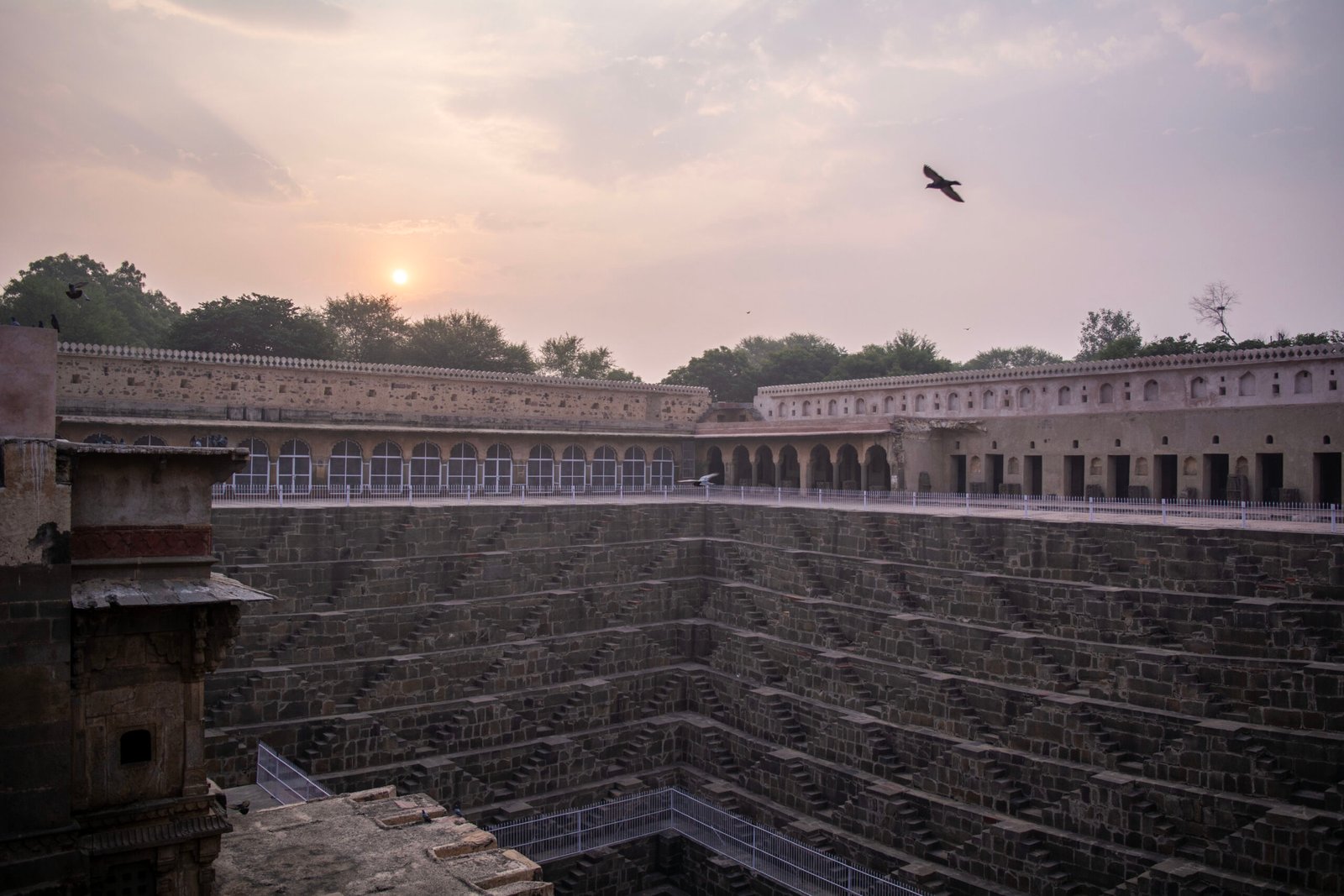
Chand Baori is known for its dramatic geometry. Around 3,500 narrow, symmetrical steps run across three sides of the structure, while a multi-storeyed pavilion occupies the fourth side. As the steps descend, the pattern becomes tighter and creates the maze-like view for which the monument is famous. Official Rajasthan Tourism information describes Chand Baori as one of the oldest and largest stepwells in the world. It was designed to conserve water in Rajasthan’s dry climate and also offered a cooler place where people could gather during intense summer heat. The beauty of Chand Baori changes through the day. Strong sunlight creates sharp lines and shadows across the steps, while softer morning and evening light brings out the depth of the structure. This is why photographers often prefer visiting outside the harsh afternoon hours.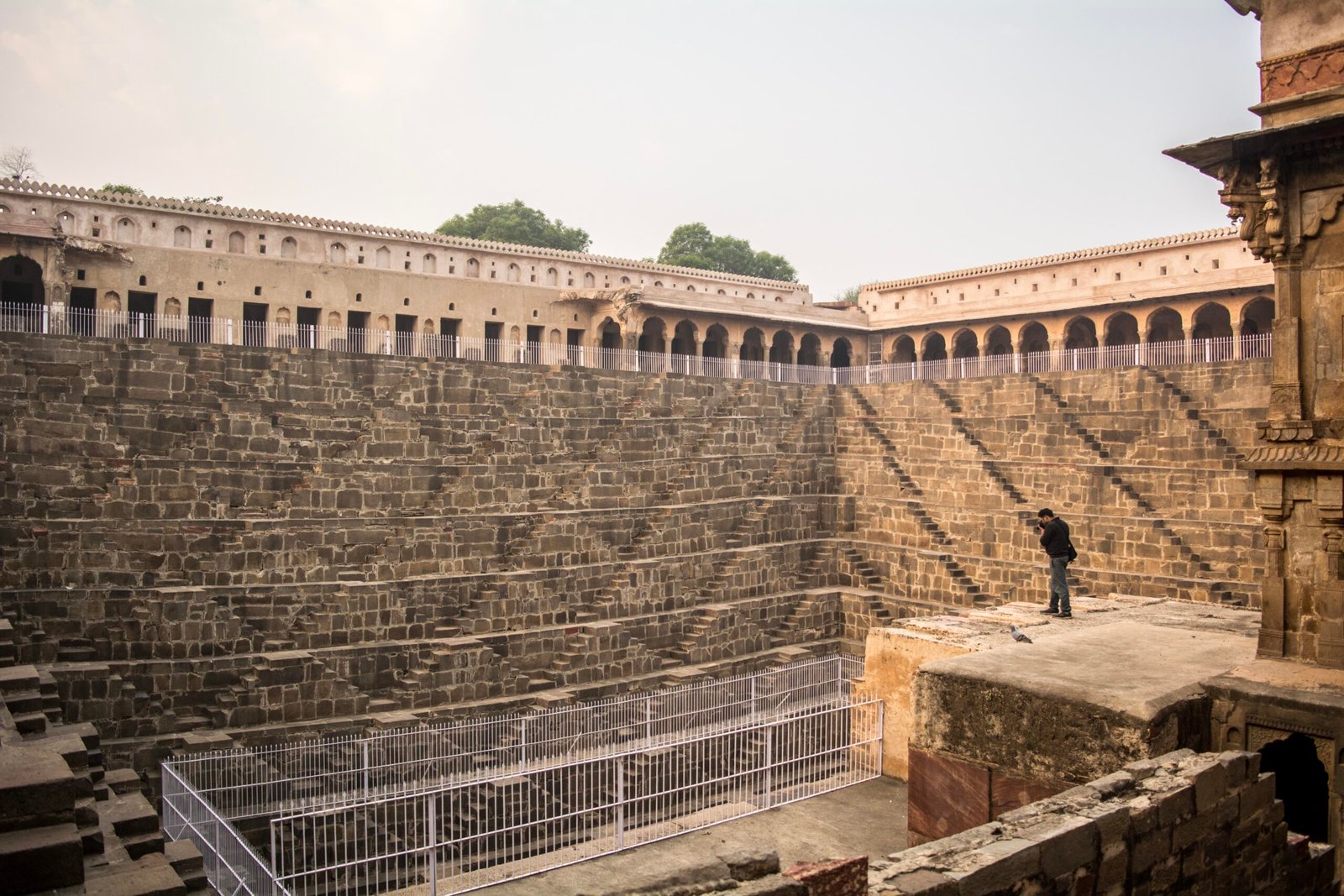

History of Chand Baori
Chand Baori is believed to have been built in the 9th century by King Chanda of the Nikumbha dynasty. The name “Chand Baori” is commonly linked with the ruler who commissioned it. In older times, a baori was much more than a water reservoir. It was part of everyday village life. People came here to collect water, rest in the naturally cooler lower levels and meet others from the community. The structure shows how practical water management and detailed architecture could exist together. Abhaneri itself is associated with the older name Abha Nagari, often translated as the “City of Brightness.” Over time, the pronunciation is believed to have changed into Abhaneri.Can Visitors Go Down the Steps?
Under normal visitor rules, tourists view Chand Baori from the protected pathway around the upper level. Entry onto the lower steps is generally restricted for safety and conservation. Do not cross barriers even if the steps appear accessible. During certain local religious occasions, access arrangements may be different and are controlled by the administration. Such access should never be assumed as a regular visitor facility.Jaljhulni Ekadashi at Chand Baori
Jaljhulni Ekadashi gives Chand Baori a special local and religious connection. On this occasion, traditional rituals may take place around the baori and, subject to official permission and safety arrangements, limited access can sometimes be provided as part of the observance. This is an annual special situation—not the everyday entry rule. Anyone planning a visit specifically for the festival should confirm the latest schedule, route and access instructions locally before travelling.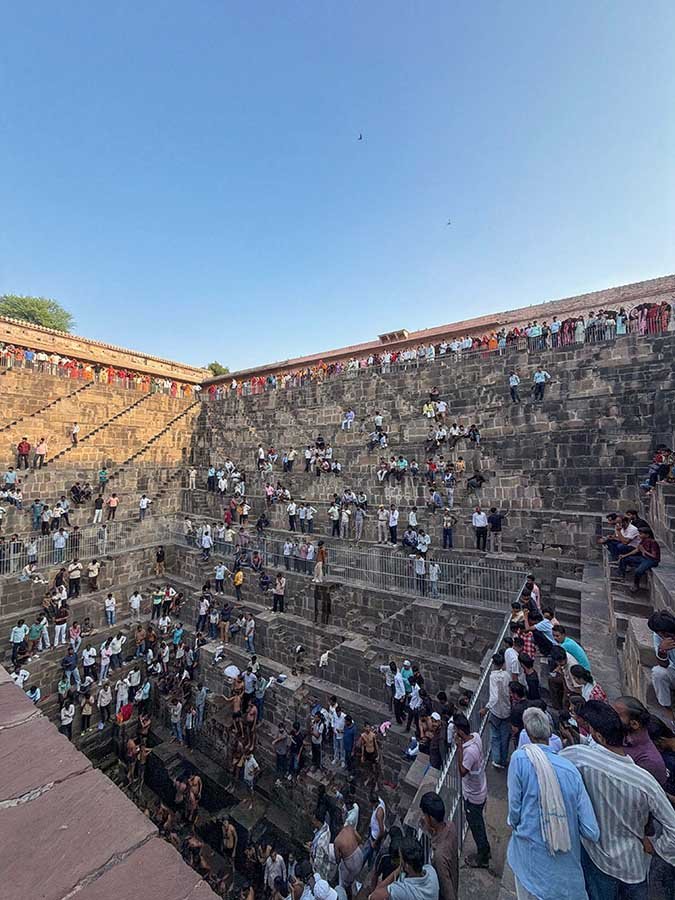
Chand Baori Timings and Entry Fee
Chand Baori is generally visited during daylight hours, with commonly listed timings around 7:30 AM to 6:30 PM. Seasonal or administrative changes are possible, so avoid reaching close to closing time. A small entry fee may apply for Indian and international visitors. Since ticket rates can be revised, it is better to check the current amount at the official counter instead of relying on an old online listing. For a relaxed visit, reach before 10 AM or after 3:30 PM. The light is usually better for photographs and the open monument area feels more comfortable than it does around midday.Harshat Mata Temple Near Chand Baori
Just beside Chand Baori stands the historic Harshat Mata Temple, dedicated to the goddess associated with happiness and joy. The temple and baori are closely connected to the heritage of Abhaneri, so visiting only the stepwell means missing an important part of the place. The temple sits on a raised platform and contains old carved stone elements. Dress respectfully, remove footwear where required and avoid disturbing ongoing worship. A combined visit to the baori and temple can comfortably be completed in about two hours.How to Reach Abhaneri from Jaipur
By Car or Taxi
Driving is the easiest option. Abhaneri is located off the Jaipur–Agra route in Dausa district. Depending on your starting point in Jaipur and current road conditions, the journey usually takes around two hours. Use live navigation for the final village approach because the turn towards Abhaneri can be easy to miss.By Train
Bandikui Junction is the nearest major railway station. From Bandikui, you will need a local taxi or other road transport to reach Chand Baori. Confirm return transport in advance, especially if you are travelling late in the day.By Bus
Buses towards Dausa, Sikandra or Bandikui may help you cover part of the route, but the final connection to Abhaneri can be less convenient. For a same-day trip from Jaipur, a private vehicle or pre-booked cab is usually simpler.Best Time to Visit Chand Baori
October to March is the most comfortable season for an Abhaneri trip. The weather is better for walking around the monument and combining it with nearby attractions.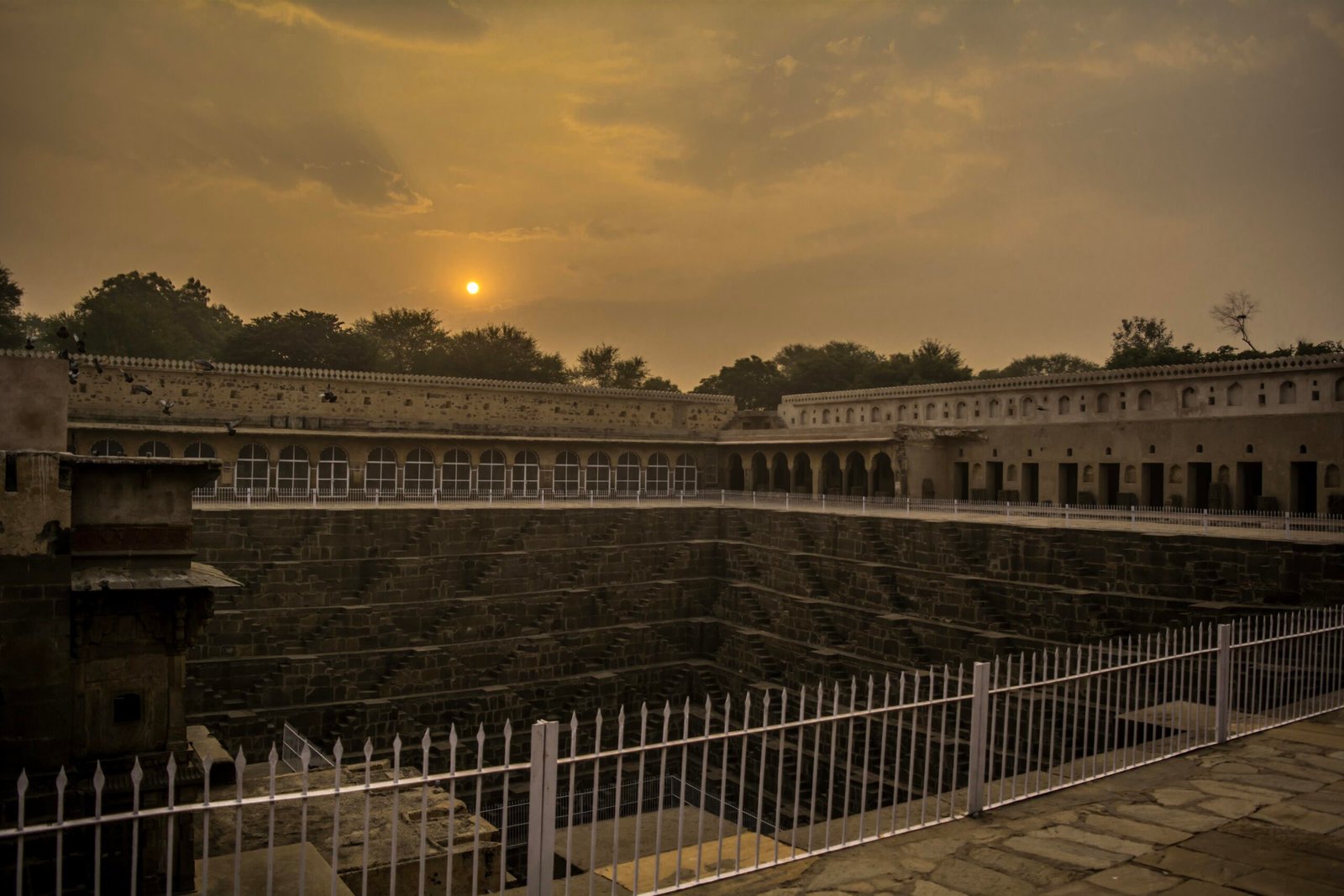
- Morning: Cooler weather, fewer visitors and soft light.
- Late afternoon: Strong geometric shadows and better photography conditions.
- Summer: Visit early and carry sufficient water; the open upper area can become very hot.
- Monsoon: The surroundings may look greener, but roads and access conditions should be checked before travelling.
Photography Tips at Chand Baori
- Use a wide-angle lens to capture the scale and symmetry.
- Try diagonal compositions instead of only straight central frames.
- Include the pavilion side to show a different architectural perspective.
- Avoid leaning over railings or entering restricted areas for a photograph.
- Early and late light creates stronger patterns across the steps.
What to Carry
- Drinking water
- Comfortable footwear
- Cap, sunglasses and sunscreen
- Cash as a backup for local purchases
- A fully charged phone or camera