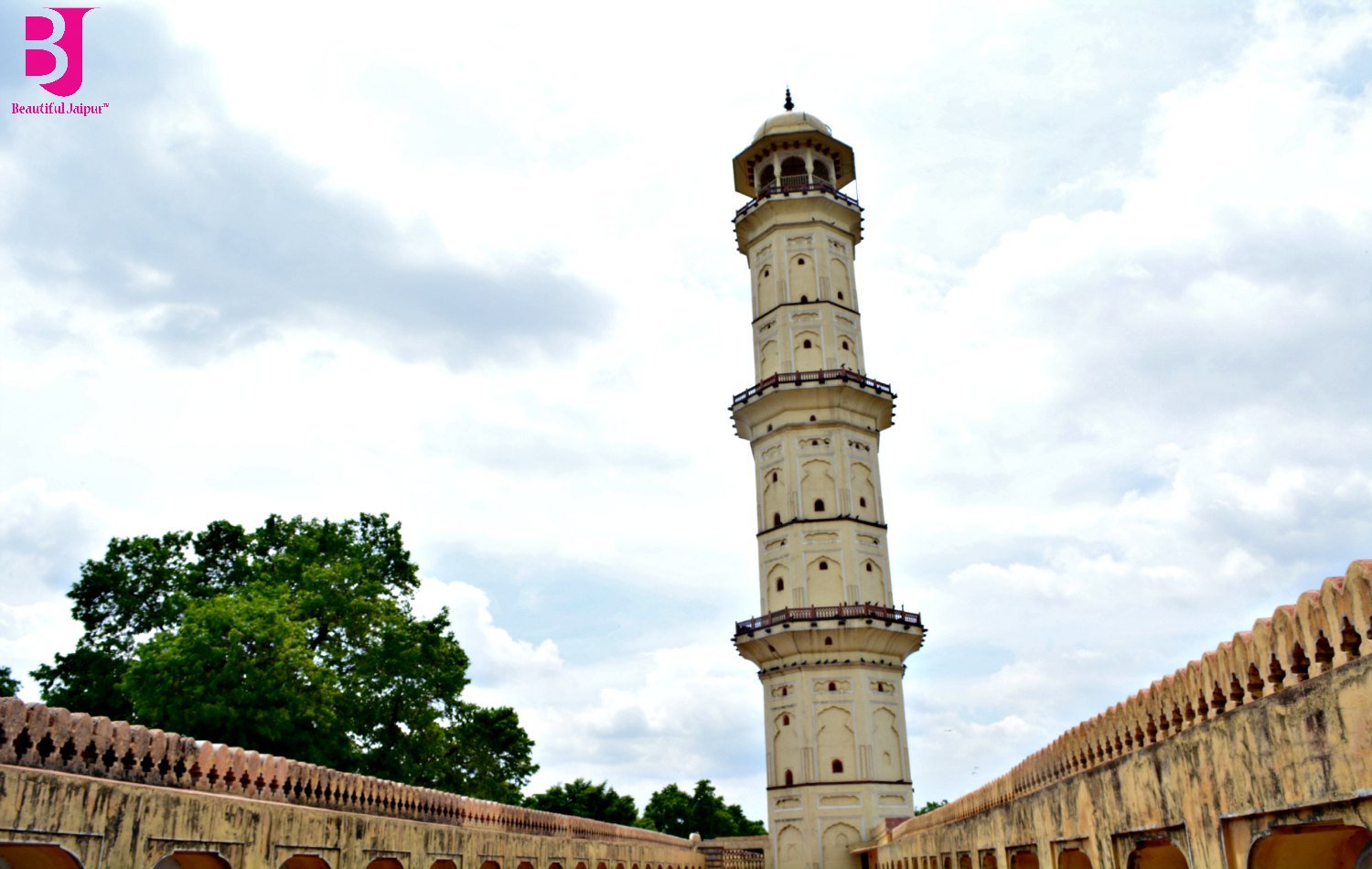
Most visitors walk through Jaipur’s old city looking at the markets, gateways and pink facades at street level. Sargasuli offers a completely different way to see the same neighbourhood—from above. Rising between the busy lanes near Tripolia Bazaar, this slender victory tower gives one of the clearest panoramic views of the historic city.
Also known as Isarlat, the tower is easy to miss from some streets because it stands inside the dense old-city fabric. Once you notice its pale, tiered structure above the rooftops, however, it becomes one of Jaipur’s most distinctive landmarks. The climb is short but narrow, and the view from the upper galleries makes it worth the effort.
Sargasuli Tower Jaipur: quick visitor information
- Also known as: Isarlat or Isar Lat
- Location: Aatish Market, near Tripolia Bazaar and Chhoti Chaupar, Jaipur
- Official visiting hours: 9:00 am to 5:00 pm
- Time required: Around 30–45 minutes
- Best time: Morning or late afternoon for softer light and clearer views
- Tickets: The official Rajasthan booking portal lists Isarlat under the composite ticket; current rates and standalone ticket availability should be confirmed at the counter or official portal
- Good for: Old-city views, architecture, history and photography
Why is Sargasuli also called Isarlat?
The tower’s historic name, Isarlat, is linked with Maharaja Sawai Ishwari Singh, who commissioned it in 1749. “Lat” refers to a tall pillar or tower, while Sargasuli is popularly understood as a passage reaching toward the heavens. Both names are widely used in Jaipur, although local signs and official listings often use Isarlat.
It was built as a victory monument after Ishwari Singh’s military success during a difficult period in Jaipur’s royal history. Unlike a fort or palace, Sargasuli was designed to make a statement through height. From the crowded streets below, its rising galleries would have been visible across a large part of the young city.
History of Sargasuli Tower
Sawai Ishwari Singh was the son of Jaipur’s founder, Sawai Jai Singh II. After Jai Singh’s death, a succession struggle developed between Ishwari Singh and his half-brother Madho Singh. Ishwari Singh’s victory at the Battle of Rajamahal became the event traditionally associated with the construction of Isarlat.
Completed in 1749, the tower became both a memorial to that victory and a symbol visible above Jaipur’s planned streets. More than two and a half centuries later, it still rises over the old city, although modern buildings and busy markets now surround its base.
Architecture of Isarlat
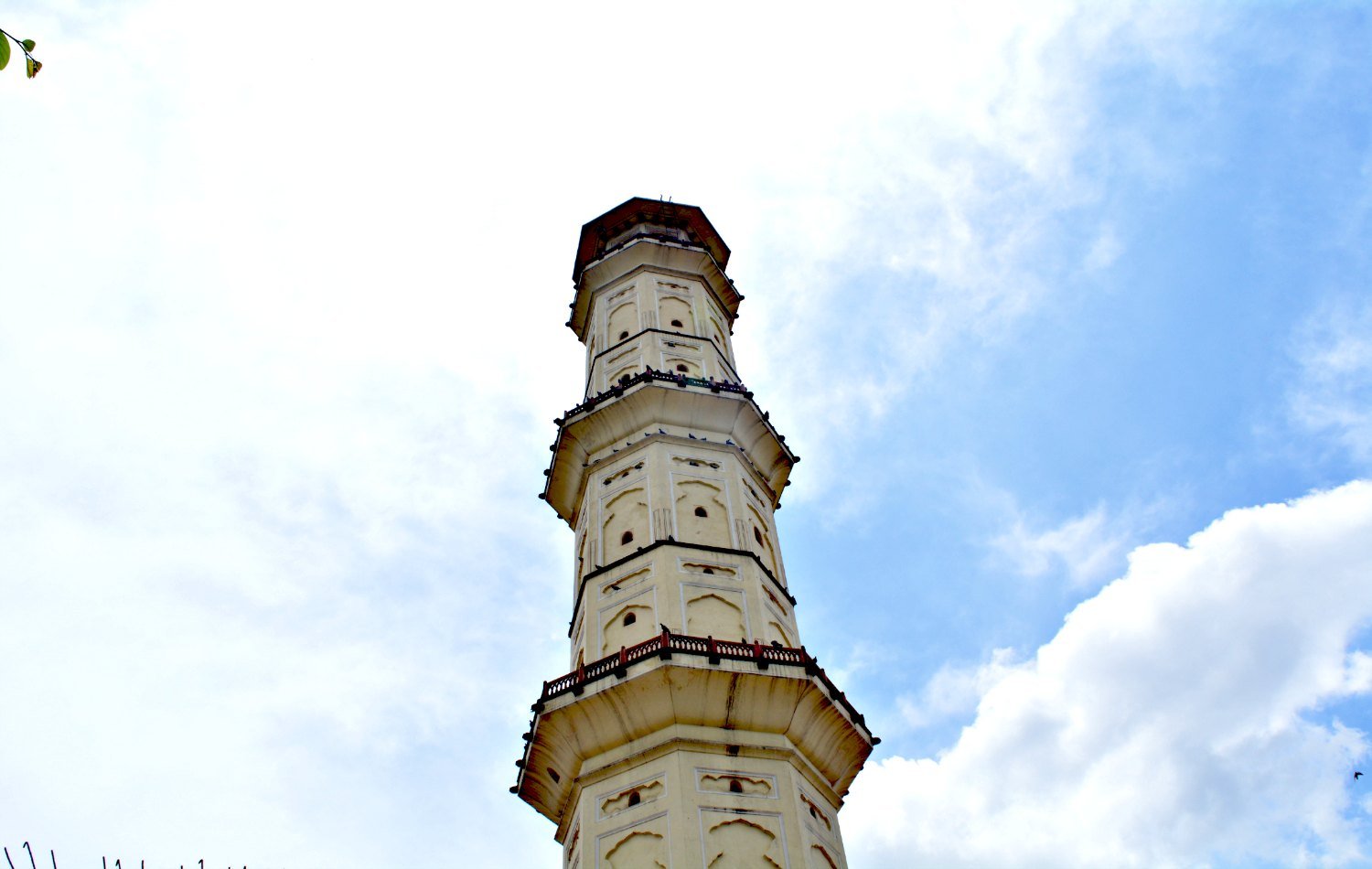
Sargasuli is approximately 140 feet high and is arranged in seven octagonal levels. Each section becomes slightly narrower as the tower rises, giving it a graceful, telescope-like profile. Projecting balconies and circular galleries break up the height, while the upper chhatri adds a recognisably Rajasthani finish.
The design is decorative without feeling heavy. Small arched openings, recessed panels and railings create changing patterns of light and shadow throughout the day. From close range, the tower feels much taller than it appears in skyline photographs.
Inside, the upward route is narrow and enclosed in places. Visitors should move slowly, allow others to pass and avoid carrying bulky bags. The climb is manageable for most active travellers, but it is not ideal for people who are uncomfortable in tight spaces or have limited mobility.
The view from Sargasuli Tower
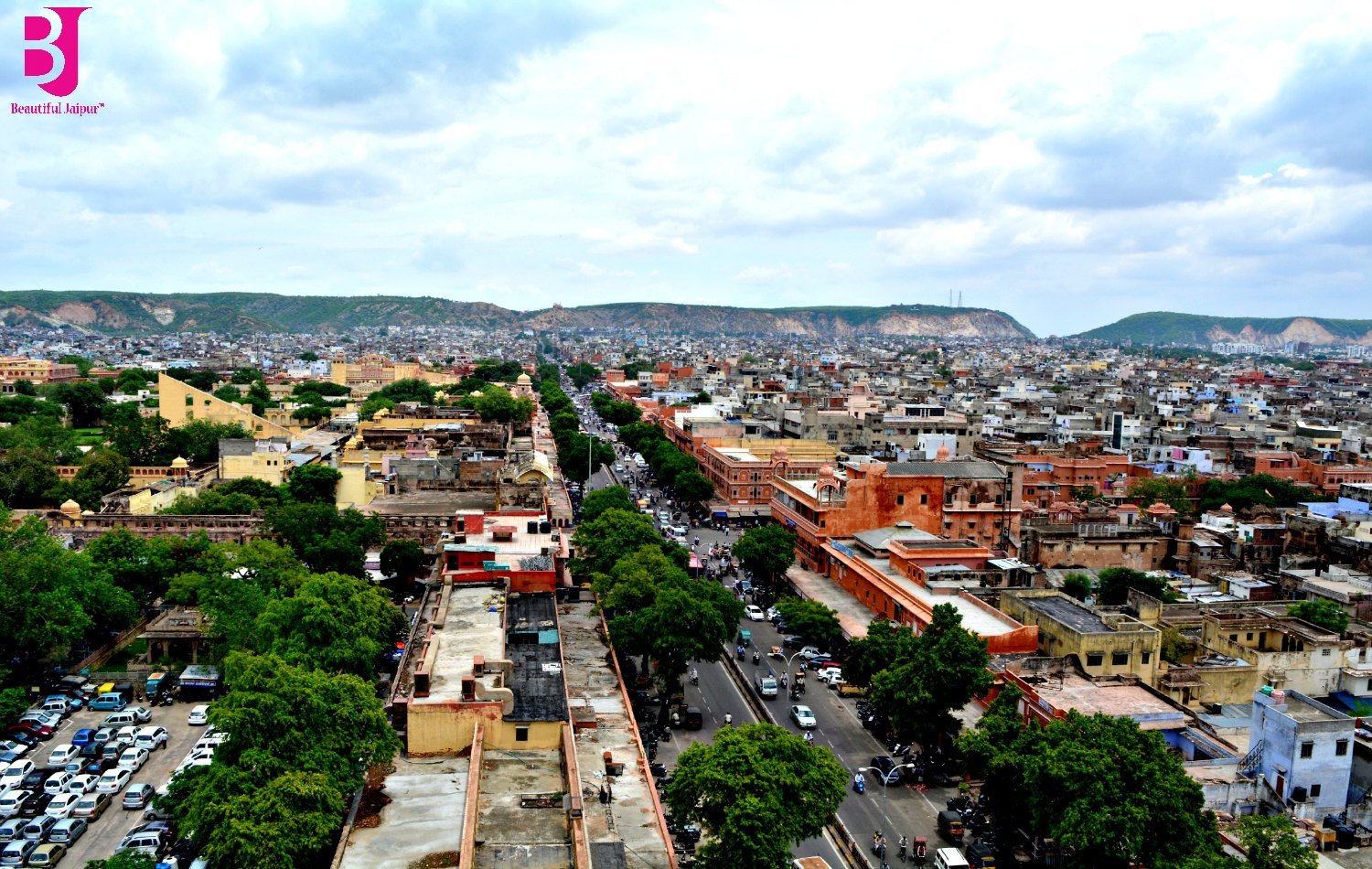
The view is the main reason to visit. From the upper galleries, Jaipur’s old city opens out in every direction: long market roads, tightly packed rooftops, temple spires, palace walls and the Aravalli hills beyond. The height makes the original grid of the walled city easier to understand than it is from street level.
You can pick out sections of Tripolia Bazaar, the City Palace area and the straight lines of Jaipur’s traditional bazaars. The scene is not a polished postcard—the traffic, rooftops and everyday activity are all part of it. That is exactly what makes the view feel so local and alive.
Sargasuli Tower timings and ticket information
The official Rajasthan tourism booking portal lists Isarlat’s visiting hours as 9:00 am to 5:00 pm. Entry may close before the stated time on certain days, so avoid arriving close to closing if you want to climb comfortably.
Isarlat is listed as part of Jaipur’s composite monument ticket. Ticket structures and prices can change, and online travel pages often show conflicting figures. Check the current rate on the official booking portal or at the monument counter on the day of your visit. Carry a digital payment option as well as some cash for convenience.
Best time to visit
Morning is usually the most comfortable time, particularly from October to March. The streets are relatively calmer, visibility is often better and the enclosed climb feels cooler. Late afternoon brings warmer light over the pink facades, but give yourself enough time before the monument closes.
Summer afternoons can be exhausting, especially when combined with walking through the bazaars. During the monsoon, the surrounding hills look greener and clouds make the skyline dramatic, although views may change quickly with rain.
How to reach Sargasuli Tower
Sargasuli is located in Aatish Market near Tripolia Bazaar, within Jaipur’s old city. Chhoti Chaupar is the most convenient nearby metro stop, followed by a short walk or e-rickshaw ride. Autos and app cabs can drop you close to the market, but traffic restrictions and congestion may affect the final approach.
If you are already visiting Hawa Mahal, City Palace or Jantar Mantar, reaching Sargasuli by foot or e-rickshaw is practical. Driving your own car is less convenient because parking inside the old city is limited. Use an authorised parking area and explore this cluster on foot.
Important tips before climbing
- Wear comfortable shoes with a secure grip.
- Carry a small bag; the internal route and galleries are narrow.
- Climb slowly and let descending visitors pass safely.
- Keep children close near the upper galleries and railings.
- Avoid the hottest part of summer days.
- Check photography and tripod rules at the ticket counter.
Photography tips
A wide lens works best for the city panorama, while a standard or short telephoto lens helps isolate market streets, rooftops and distant hills. At the base, stand far enough back to capture the full height of the tower; space is limited, so a low angle can create a stronger composition.
The upper galleries are narrow, and other visitors need room to move. Avoid blocking the passage for photographs and secure your phone or camera before leaning toward an opening. The images in this guide are from Beautiful Jaipur’s own archive.
Places to visit near Sargasuli
Sargasuli fits easily into an old-city walking route. Visit City Palace and Jantar Mantar first, continue towards Tripolia Bazaar and climb Sargasuli, then walk or take an e-rickshaw to Hawa Mahal. The route combines Jaipur’s royal buildings, scientific heritage, markets and skyline in one compact area.
If you have more time, add Albert Hall Museum later in the day. For another elevated view of Jaipur, Nahargarh Fort offers a much wider perspective from the Aravalli hills.
Frequently asked questions
Are Sargasuli and Isarlat the same place?
Yes. Isarlat, Isar Lat and Sargasuli are names used for the same historic victory tower in Jaipur’s old city.
How long does it take to visit Sargasuli?
Keep around 30 to 45 minutes for buying the ticket, climbing, enjoying the views and returning to the base. It may take longer when visitor movement is slow inside the narrow tower.
Is the climb difficult?
The climb is not very long, but the internal passage is narrow and can feel enclosed. Visitors with mobility difficulties, severe knee problems or discomfort in tight spaces may find it challenging.
What is Sargasuli famous for?
It is famous as an 18th-century victory tower, for its seven-level octagonal architecture and for panoramic views over Jaipur’s walled city.
Beautiful Jaipur’s local note
Sargasuli is not Jaipur’s biggest monument, but it changes how you see the old city. At street level, the bazaars can feel crowded and confusing; from the tower, their careful planning becomes visible. Pair the climb with a slow walk through Tripolia Bazaar and Chhoti Chaupar to experience both sides of historic Jaipur.