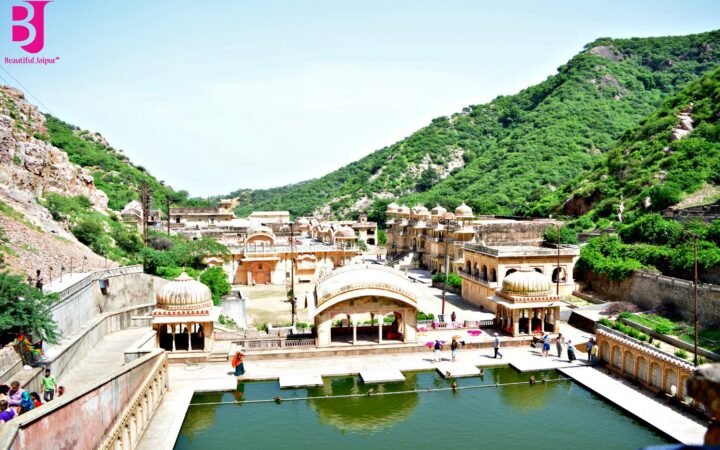
Most visitors heading to Amer go straight to the fort, but barely a few minutes away stands a temple where history, devotion and architecture come together beautifully. Jagat Shiromani Temple is one of Amer’s finest heritage temples, associated with Lord Krishna, Lord Vishnu and the poet-saint Meera Bai.
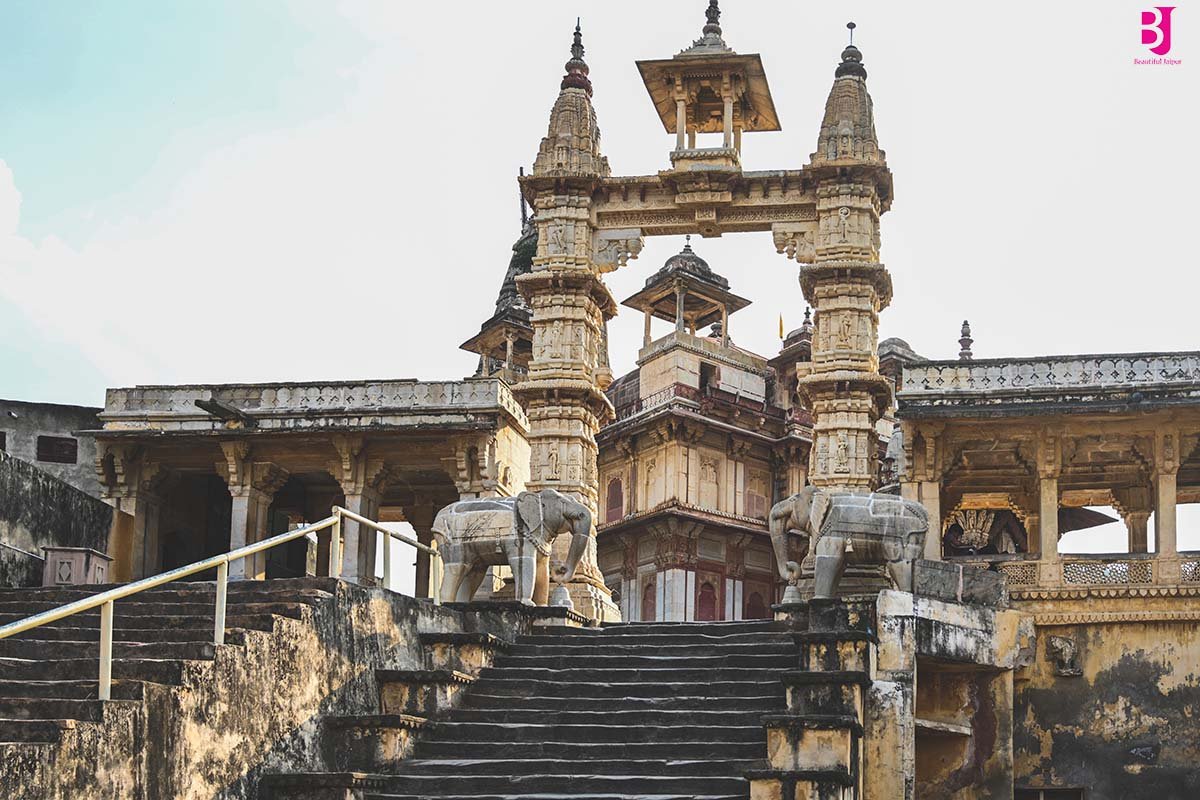
The steep staircase and carved torana immediately catch your attention, but the real beauty appears once you enter the complex. Its stone pillars, ceilings and walls are covered with fine carvings that deserve more than a quick glance. You do not need a separate day for this temple—Jagat Shiromani Temple, Amer Fort and Panna Meena ka Kund can easily be covered in one well-planned half-day trip.
Where is Jagat Shiromani Temple?
The temple is located at 6 Sagar Road in Amer, around 500 metres from Amer Fort. Depending on traffic, it generally takes about 30–45 minutes to reach Amer from central Jaipur.
You can travel by cab, auto-rickshaw, local bus or private vehicle. Parking near Amer Fort is usually more practical, after which the temple can be reached on foot. The lanes inside Amer are narrow in places, so taking a large vehicle right up to the entrance is not recommended.
History of Jagat Shiromani Temple
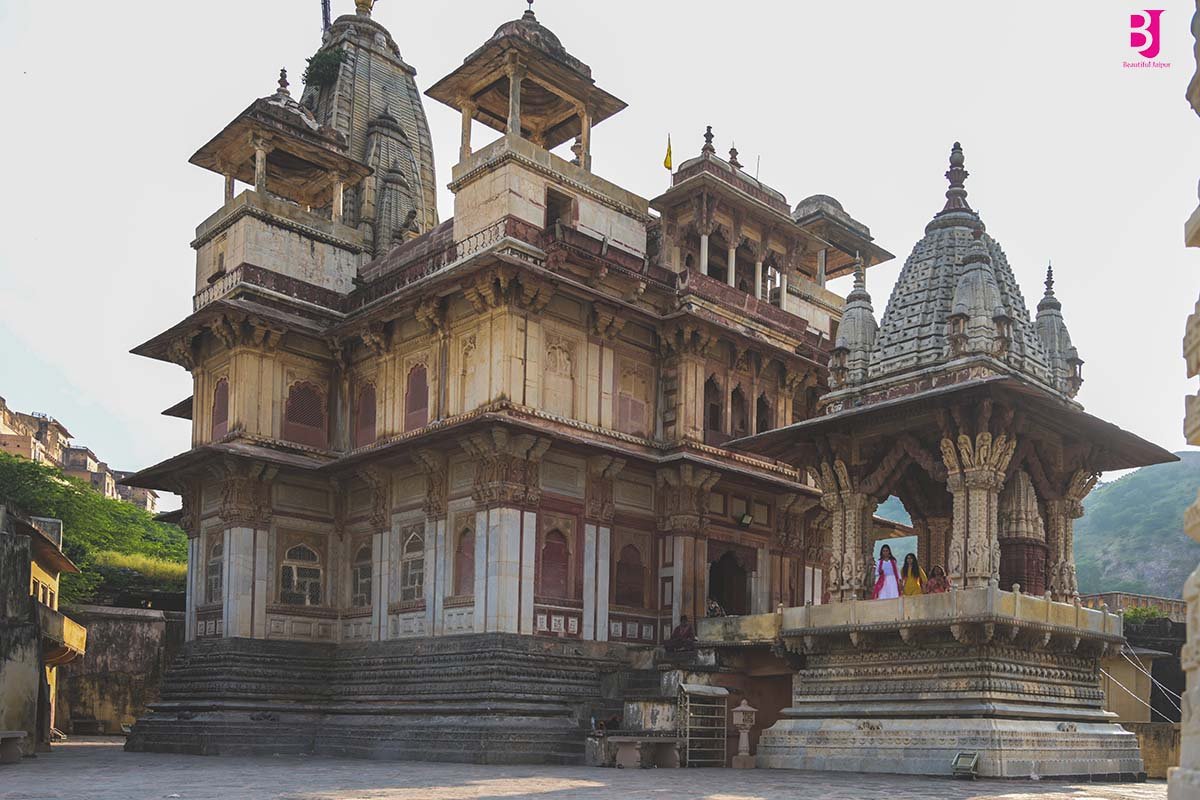
According to Rajasthan Tourism, the temple was built between 1599 and 1608 CE. Queen Kanakwati, wife of Raja Man Singh I of Amer, commissioned it in memory of their son Jagat Singh. The name “Jagat Shiromani” is also connected with this royal memorial.
This history gives the temple an emotional layer beyond its royal scale. It carries the memory of a mother, the faith of Amer’s royal family and the craftsmanship of the period. The structure uses local sandstone and marble, while its design combines Rajput architectural traditions with influences visible in the Mughal era.
The Meera Bai and Krishna Connection
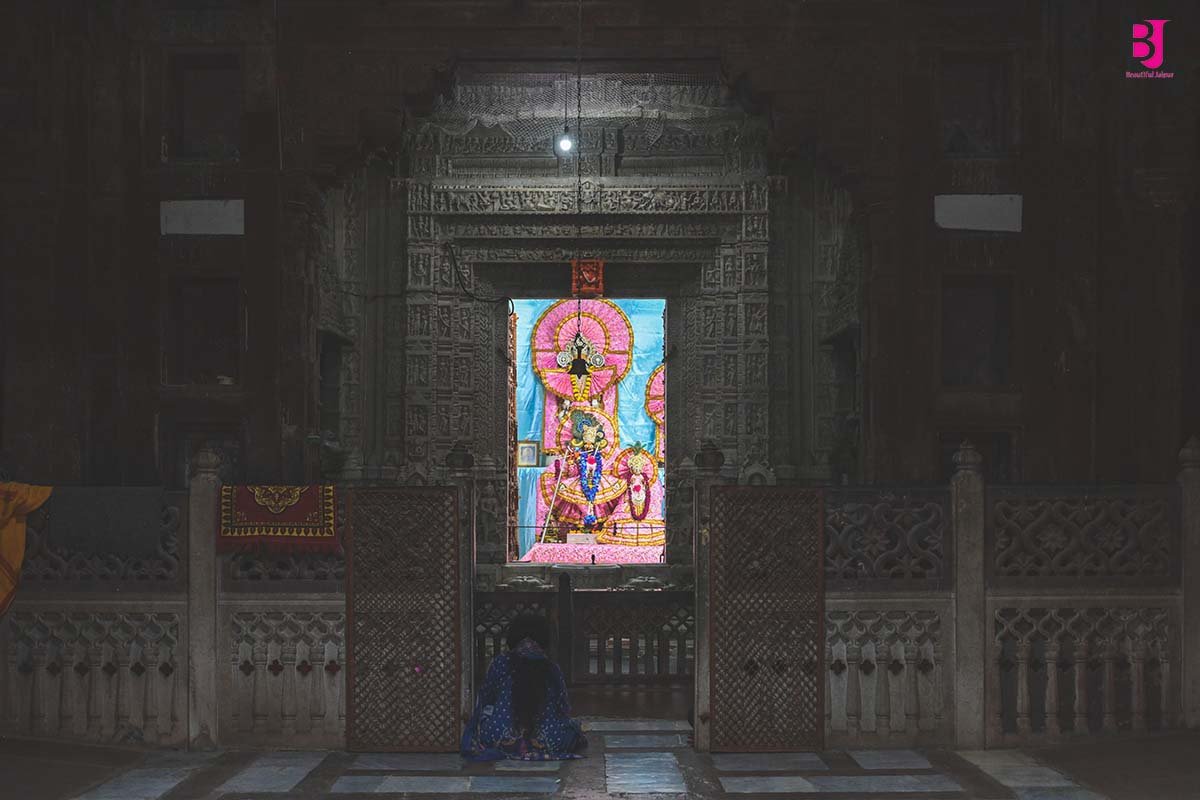
The temple’s best-known story is linked to its Krishna idol. According to local tradition, the idol enshrined here is believed to be the same one worshipped by Meera Bai in Mewar. It is said to have been brought to Amer for safety and later placed inside Jagat Shiromani Temple.
A statue of Meera Bai is also worshipped alongside Lord Krishna, which is why many people refer to the site as the Meera Temple of Amer. The story belongs to local religious tradition, but the temple’s connection with Meera’s devotion to Krishna remains central to its identity.
What to See Inside the Temple
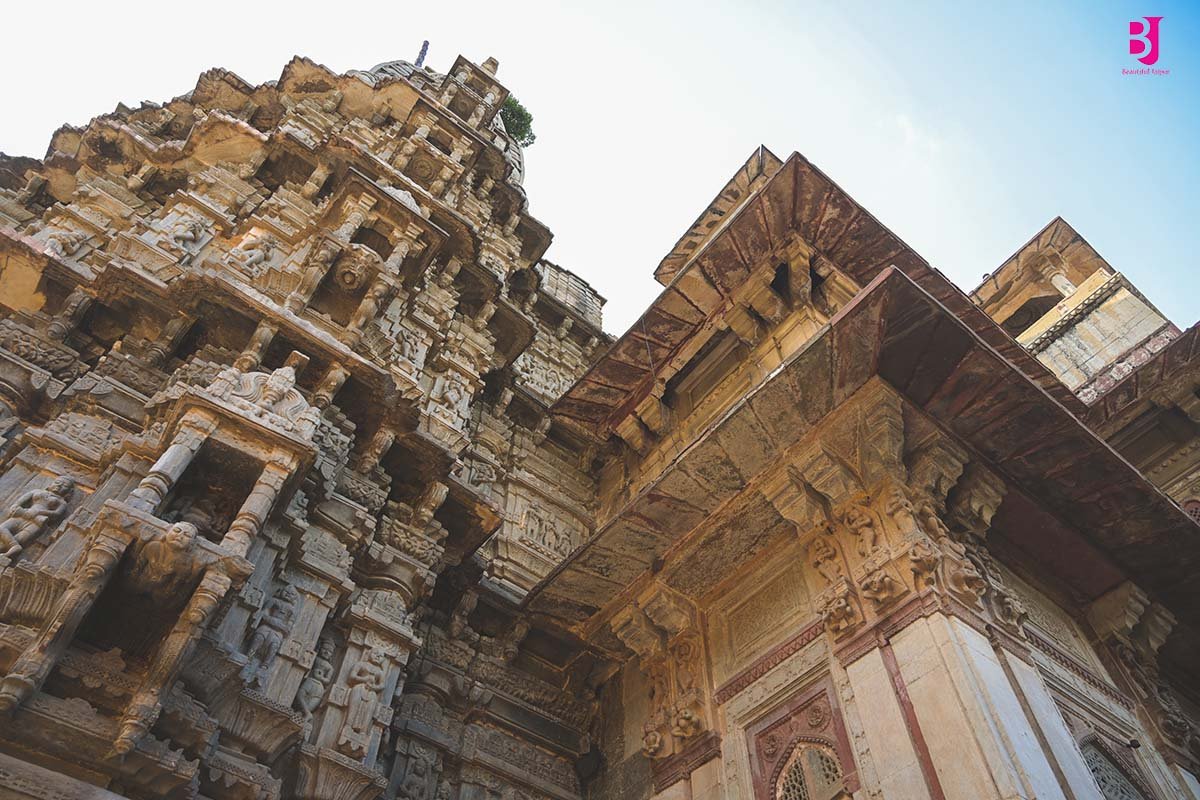
The Carved Torana
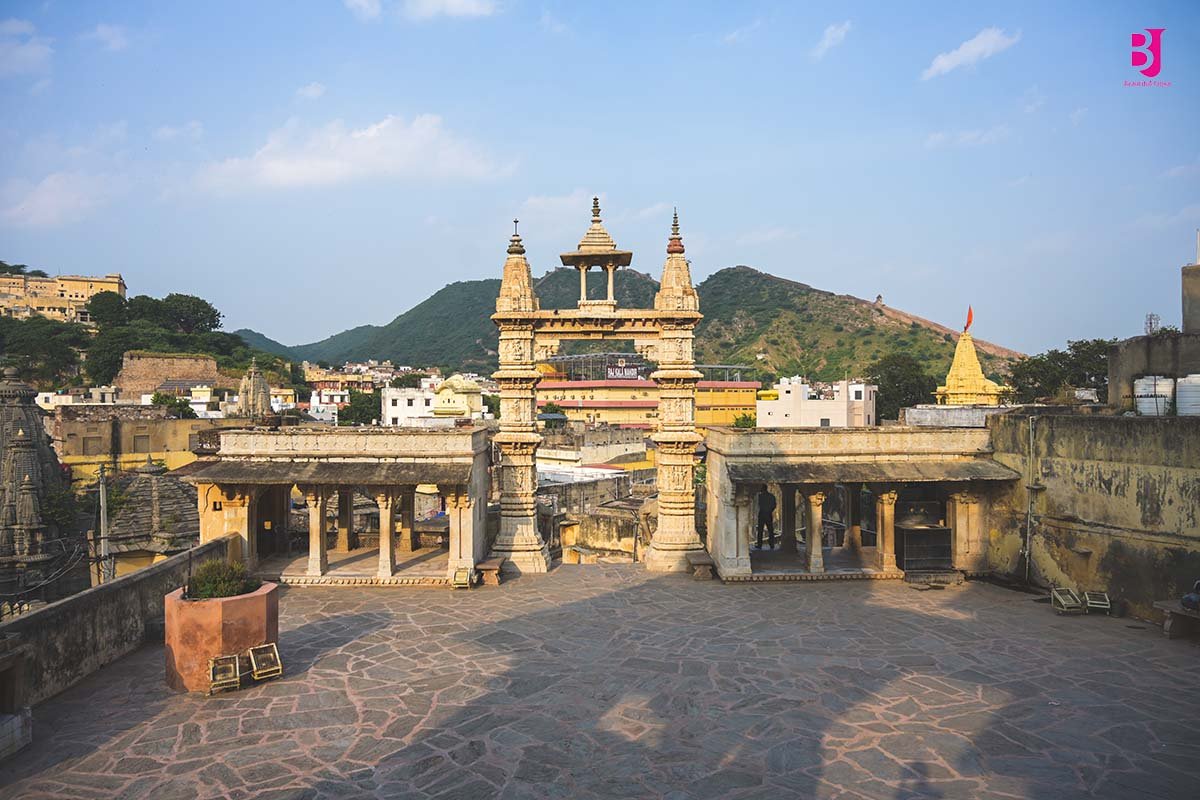
The stone torana near the entrance is one of the temple’s most photographed features. Its detailed figures and carved pillars look especially beautiful in the softer morning light.
The Steep Staircase
A flight of steep steps leads to the main temple. Elderly visitors, young children and anyone with knee problems should climb slowly. Turn around midway and you will also get a lovely view of old Amer.
Carved Pillars and Ceilings
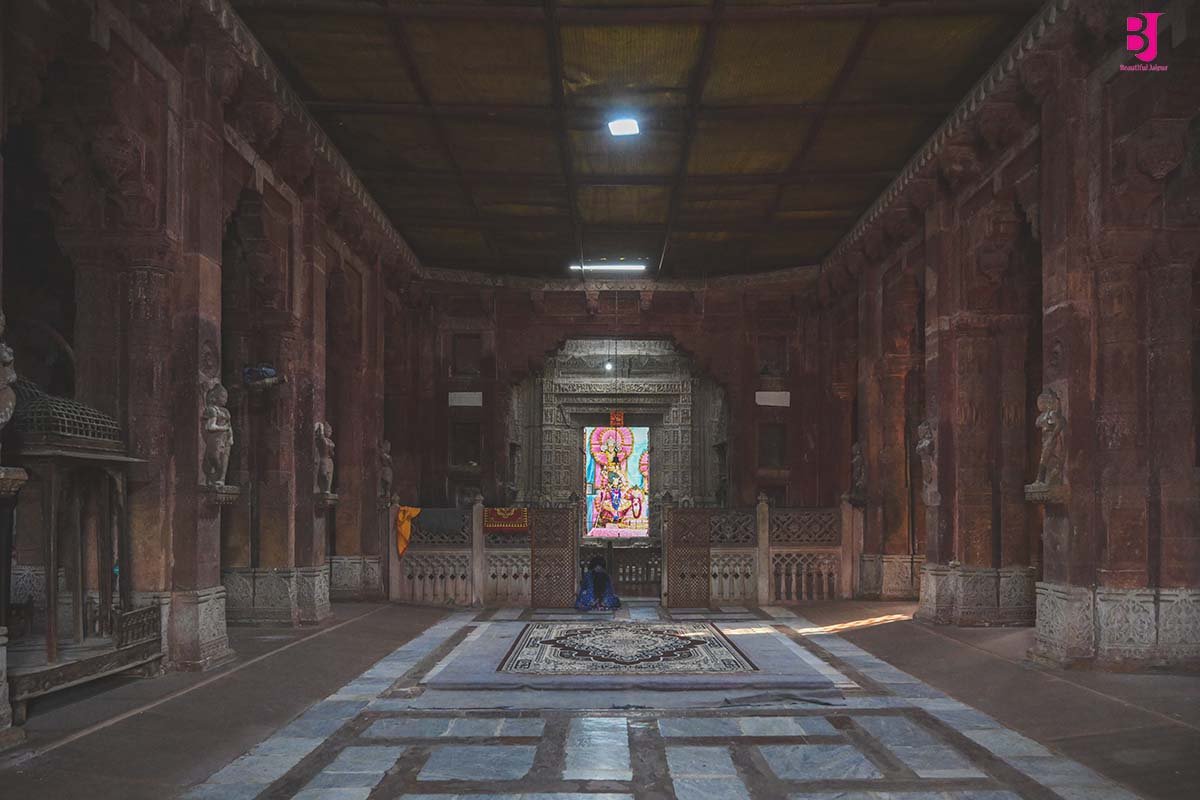
The mandapa contains carvings of deities, musicians, floral patterns and mythological figures. Instead of leaving immediately after darshan, spend a few minutes observing the pillars and ceiling—the craftsmanship is the real highlight of the temple.
Jagat Shiromani Temple Timings
The temple’s official website lists general timings from 6:00 AM to 8:00 PM. Some local visitor information mentions an afternoon closure, with darshan available from 6:00 AM to 1:00 PM and again from 4:00 PM to 8:00 PM.
To avoid arriving during a closed period, morning is the safest and most pleasant time to visit. Timings can change during Janmashtami, special pujas and religious occasions, so check the latest update before travelling.
Entry Fee and Time Required
- Entry fee: Free
- Time required: Around 30–45 minutes
- Best time: 7:00 AM to 9:00 AM
- Photography: Usually possible outside; follow the instructions near the sanctum
If you enjoy heritage architecture or photography, keep about an hour. The temple is quieter in the morning and the light brings out the details of the stone carvings.
Useful Tips Before You Visit
- Wear comfortable footwear with a good grip because the stairs are steep.
- Check photography rules before taking pictures near the sanctum.
- Remember that this is an active place of worship; dress modestly and maintain silence.
- Visit early during summer, as the stone steps can become hot by afternoon.
- Avoid carrying large bags or unnecessary luggage.
- Confirm the day’s timings during festivals and special pujas.
Places to Visit Near Jagat Shiromani Temple
The temple’s location makes it easy to combine with several important attractions around Amer:
- Amer Fort: Roughly 500 metres away; check current tickets and opening hours before visiting.
- Panna Meena ka Kund: Amer’s famous historic stepwell and an easy stop after the temple.
- Jaigarh Fort: Located above Amer and known for its fortifications and Jaivana cannon.
- Jal Mahal: A convenient stop on Amer Road while returning to Jaipur.
A Practical Half-Day Amer Plan
Start early at Jagat Shiromani Temple, then walk or drive to Panna Meena ka Kund before entering Amer Fort. If you have enough time and energy, continue to Jaigarh Fort. On the way back, stop at Jal Mahal for photographs.
If you want to include more attractions across the city, use our practical one-day Jaipur itinerary to organise the rest of your day.
Why Jagat Shiromani Temple is Worth Visiting
Jagat Shiromani Temple is not as crowded or widely promoted as Amer Fort, and that is part of its charm. It offers remarkable stonework, a meaningful connection with Meera and Krishna, and a quieter look at Amer’s living heritage.
If you want to understand Jaipur beyond its forts and palaces, add this temple to your Amer itinerary. It does not take long to visit, yet it often becomes one of the most memorable stops in the area.
Frequently Asked Questions
Who is Jagat Shiromani Temple dedicated to?
The temple is associated with Lord Krishna, Lord Vishnu and Meera Bai. A statue of Meera is worshipped alongside Krishna.
Is there an entry fee?
No. General entry and darshan are free.
How far is the temple from Amer Fort?
It is approximately 500 metres from Amer Fort and can be reached on foot.
How much time is needed?
Allow 30–45 minutes for darshan and a relaxed look at the architecture. Photography enthusiasts may want about an hour.
What is the best time to visit?
Morning between 7:00 AM and 9:00 AM is ideal for quieter darshan, cooler weather and better light.